Crochet Pillow Amigurumi: Free Pattern & Step-by-Step Tutorial
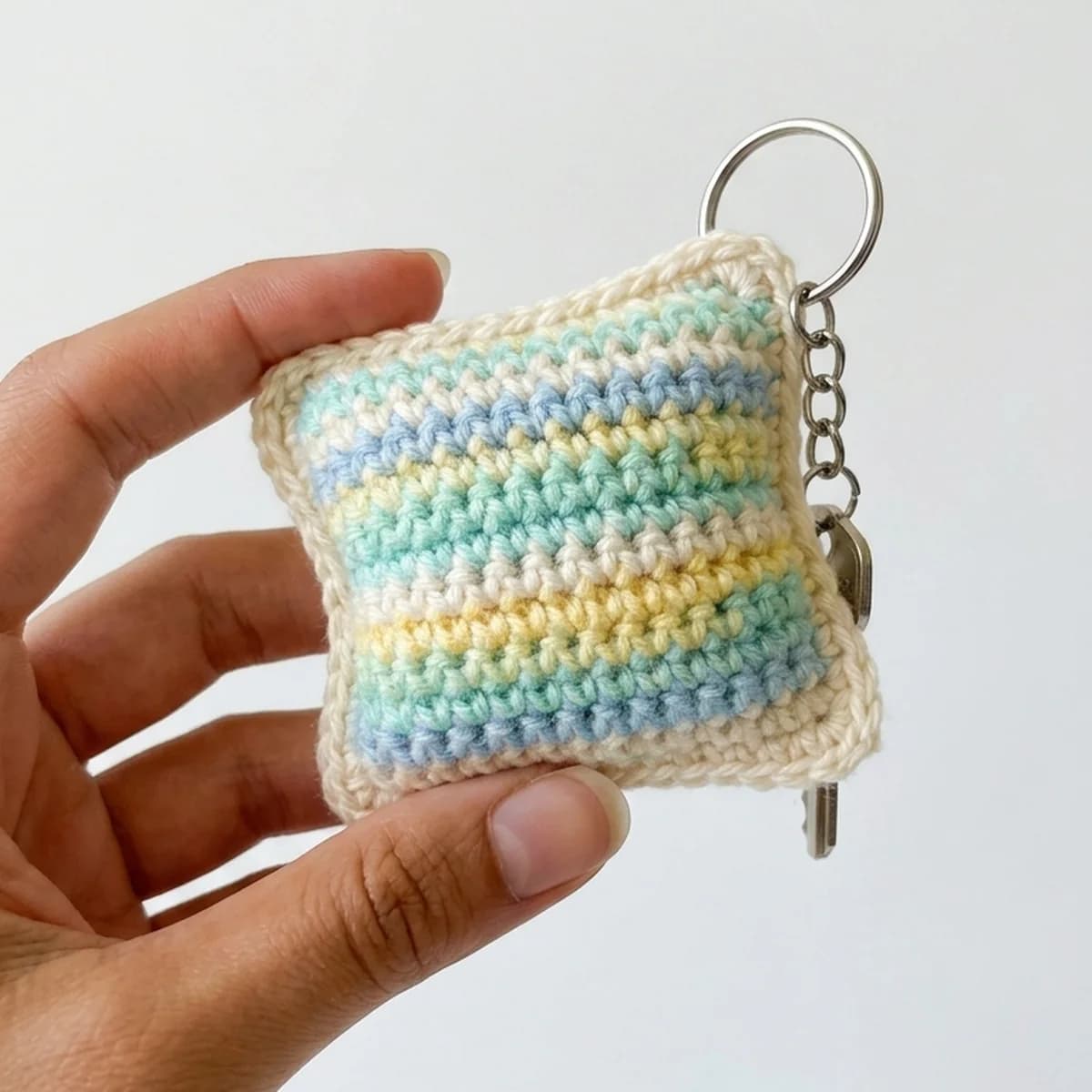
Why You’ll Love This Pillow Crochet Keychain
Note: This pattern uses US crochet terminology. UK/Commonwealth terms: sc = dc, hdc = htr, dc = tr, tr = dtr.
If you are looking for a quick, charming, and highly satisfying project, this pillow crochet keychain is the ultimate choice. Mini pillows are not only incredibly adorable, but they are also exceptionally versatile. You can use them to embellish your backpack, keep your keys organized, or even function as a mini pin cushion for your sewing corner. This pattern is designed to be beginner-friendly while still offering a delightful experience for seasoned crocheters who want to clear out their yarn stash.
The beauty of this project lies in its simplicity and the room it leaves for customization. You can choose soft pastel colors for a calming, cozy look, or go for bright, vibrant neon shades to make your keys pop. It takes less than an hour to complete one mini pillow, making it the perfect last-minute gift or a high-margin product to sell in bulk at craft fairs. Let’s dive into the details and start crafting!
Materials and Tools Required
- Yarn: Sport weight or DK weight cotton yarn (e.g., 100% mercerized cotton for clean stitch definition). You will need very small amounts, making this an excellent scrap buster. Recommended colors: Mint green, pastel pink, creamy white, or soft lavender.
- Crochet Hook: 2.0 mm or 2.25 mm (US B-1) to ensure your stitches are tight enough so the fiberfill doesn’t peek through.
- Fiberfill Stuffing: Premium polyester stuffing to give your mini pillow its fluffy, bouncy shape.
- Tapestry Needle: A blunt-tipped needle for weaving in ends and embroidering details.
- Keychain Hardware: A sturdy metal key ring with a short chain and a jump ring.
- Embroidery Floss: Black and pink floss to embroider a sleepy face (optional, but highly recommended for the cute factor).
- Scissors and Stitch Markers: Essential accessories for keeping track of your rows.
Abbreviations (US Terminology)
- ch – chain stitch
- sc – single crochet
- inc – increase (work 2 single crochets in the same stitch)
- dec – decrease (work an invisible decrease over 2 stitches)
- sl st – slip stitch
- st(s) – stitch(es)
- FLO – front loop only
- BLO – back loop only
Step-by-Step Written Pattern
Unlike spherical amigurumi, this mini pillow is crocheted in flat rows first and then joined together, or worked in a continuous spiral that is flattened. For this pattern, we will crochet two identical flat squares and join them together with single crochet stitches. This method gives clean, sharp edges that resemble a real pillow.
The Front and Back Panels (Make 2)
Using your primary color yarn and a 2.0 mm hook. Leave a short tail at the beginning.
Row 1: Chain 13. Starting from the second chain from your hook, work 1 sc in each of the next 12 chains. Chain 1, turn your work. (12 sts)
Row 2 to Row 12: Work 1 sc in each stitch across. Chain 1, turn your work. (12 sts each row)
Row 13: Work 1 sc in each stitch across. Fasten off. For the first panel (the back), cut the yarn and weave in the end. For the second panel (the front), do not cut the yarn as we will use it to join the two pieces together.
Embroidering the Cute Sleepy Face
Before joining the panels, it is much easier to add details to the front panel now. Grab your black embroidery floss and tapestry needle.
Locate Row 6 and Row 7 of your front panel. Embroider two sleepy curved eyes spanning 2 stitches wide, with 3 stitches of separation between them. Underneath the eyes, you can use pink embroidery floss or pink yarn to create two small horizontal lines for the cheeks. If you want a smiling mouth, make a tiny V-shape centered between the eyes. Press gently from behind to make sure the stitches are secure.
Joining and Assembly
- Place the front panel (with the face) directly on top of the back panel, ensuring the rows align perfectly.
- Insert your hook through both the front and back panels at one of the top corners. Secure the yarn and start working single crochets along the edges to join them.
- Work 1 sc in each row/stitch along the side. When you reach a corner, work 3 sc in the same corner stitch. This helps the corners stay square rather than rounded.
- Continue single crocheting down the second side and along the bottom edge.
- Stuffing: Stop before closing the last side. Stuff the mini pillow firmly with polyester fiberfill. Use the back of your crochet hook to push the stuffing into the far corners so your pillow doesn’t look round like a ball.
- Work single crochets along the final side to close the pillow. Join with a slip stitch to the first single crochet. Fasten off and weave in all yarn ends inside the pillow using your tapestry needle.
Adding the Keychain Attachment
To turn this adorable pillow into a functional keychain, you will need to attach the metal ring. Open the jump ring of your keychain assembly using pliers or your fingers. Loop the jump ring through one of the top corner stitches of your crochet pillow. Close the jump ring securely, ensuring there is no gap for the thread to slide out. Your keychain is now ready to use!
Expert Tips for a Professional Finish
To get a perfectly square pillow shape, keep your tension consistent throughout. If your rows start getting wider or narrower, recount your stitches to make sure you have exactly 12 in every row. Additionally, when stuffing, do not overstuff to the point where the stitches stretch and show the white stuffing inside. Moderation is key to maintaining a neat appearance.
Variations to Try
Once you master the basic square pillow, you can experiment with different designs. Try crocheting stripes by changing colors every two rows. Alternatively, you can crochet a small flower or a heart applique and sew it onto the front instead of embroidering a face. Another fun idea is adding tiny tassels to the four corners of the pillow to give it a vintage, bohemian aesthetic.
Conclusion
Crafting this pillow crochet keychain is a quick, gratifying way to create something beautiful and functional. It requires very little time, minimal materials, and is highly customizable. Share this pattern with your crafting community, and enjoy showing off your handiwork wherever you go!